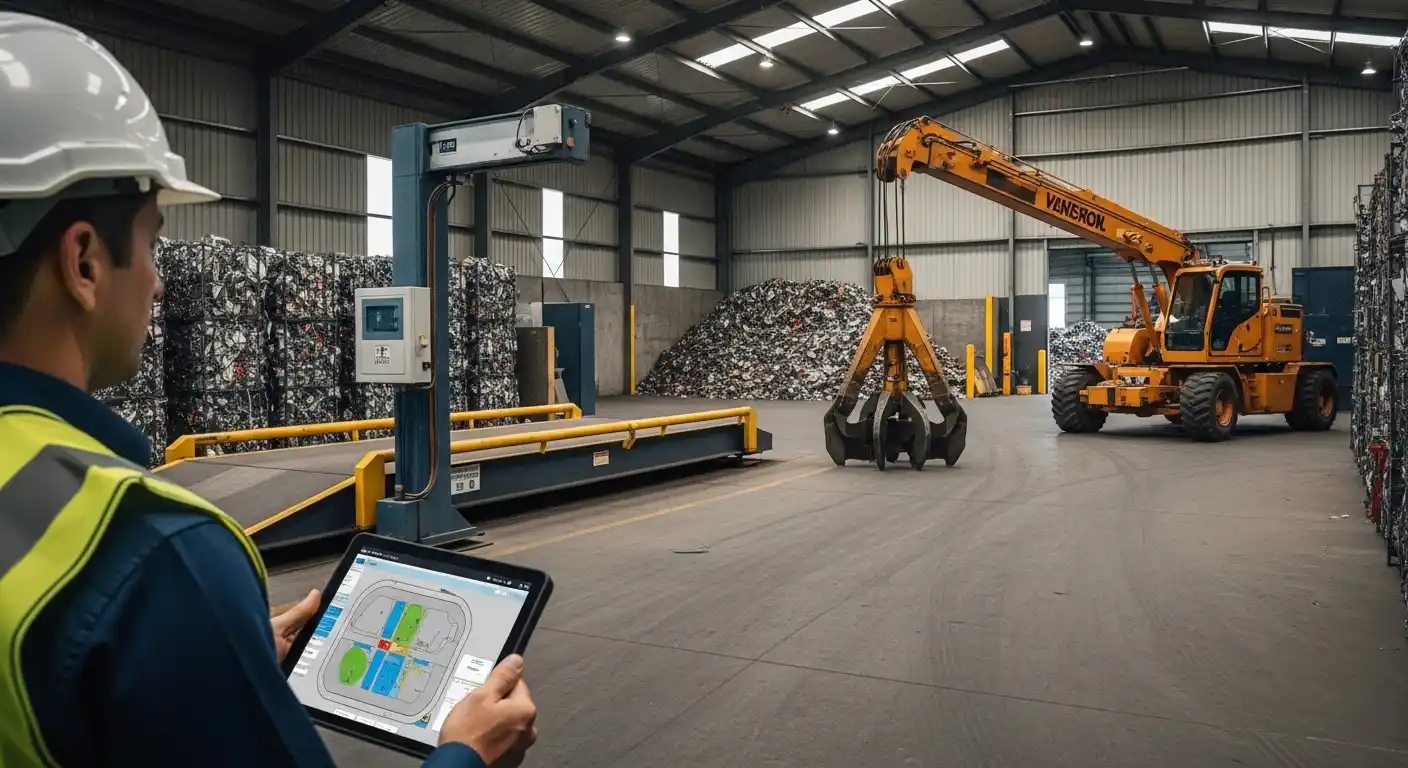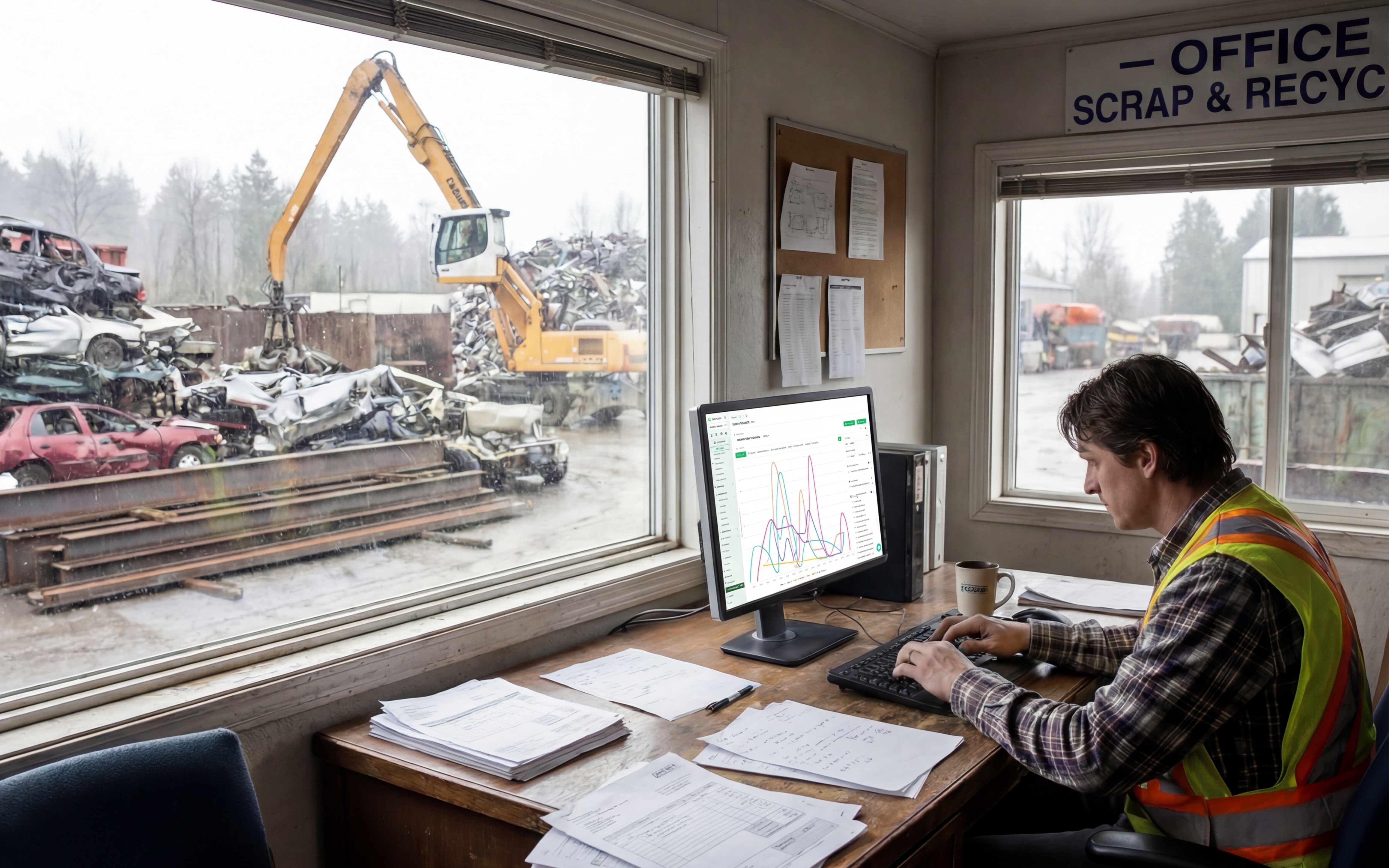


Operating a commercial recycling facility carries significant risk. Scrap metal theft is a massive operational liability. It threatens your business license and destroys profit margins.
A physical fence will not stop determined criminals. If your yard relies on paper tickets and disconnected analog cameras, it becomes an easy target for illegal activity. Yards utilizing outdated methods face severe penalties during a police audit. Digital tracking and enterprise software serve as your only real defense against buying illicit material.
The Financial Impact of Stolen Scrap Metal
When a yard unknowingly purchases stolen scrap metal, the financial consequences extend far beyond the initial transaction cost. Law enforcement agencies can place a strict hold on your entire inventory.
This freezes your assets and prevents you from processing or shipping material to mills. This immediate disruption drains your cash flow and forces your staging areas to reach maximum capacity.
A steady stream of metal theft news often highlights local yards facing heavy fines or operational shutdowns due to compliance negligence. You must treat security as a financial imperative.
Having strategic reporting for yard owners ensures you can audit your inbound purchases instantly. You need total visibility into who is selling what and how often they visit the scale. If a retail walk-up customer suddenly brings in commercial quantities of bright bare copper wire, your software system must flag that transaction for management review before any cash changes hands.
Upgrading Scrap Yard Security Beyond the Fence
Upgrading your scrap yard security requires looking beyond the perimeter chain link fence. You must design physical choke points that force compliance from everyone entering the property.
When planning your scrap yard layout, you must implement the following physical and operational deterrents:
- Single Points of Entry: Force all inbound public traffic and outbound commercial freight through one controlled gate monitored directly by the scale house operators.
- Isolated Non-Ferrous Staging: Keep high-value commodities locked inside a separate warehouse with highly restricted employee access to prevent internal shrinkage and off-hours theft.
- Adequate Illumination: Install high-lumen industrial LED lighting across the entire yard to deter night trespassers and provide clear visibility for your camera networks.
- Digital Traffic Monitoring: Use targeted tools for operations managers to track exactly how long vehicles remain on the property and verify that every single truck crossing the scale has an associated weight ticket.
Implementing Scrap Yard Video Surveillance and AI
Traditional security cameras are completely passive. They only provide a grainy recording of an event after the material is already gone. Implementing proper scrap yard video surveillance requires a proactive approach that stops bad transactions before they finalize.
- Identifying Theft at the Source: Stealing scrap metal often happens right at the scale when operators are distracted by long lines. A seller might attempt to slip restricted materials into a load, or an operator might misgrade a pile of metal under pressure.
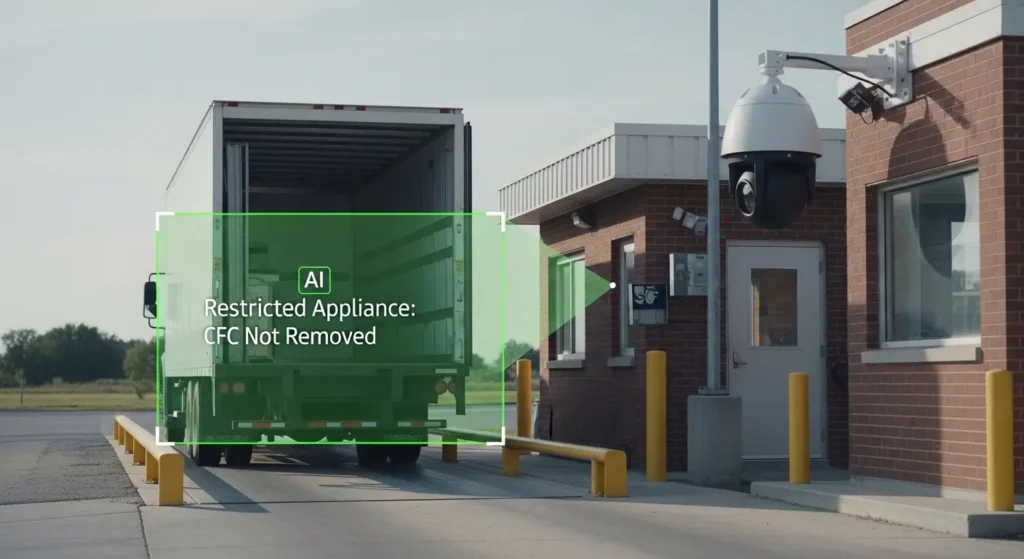
- Deploying Intelligent Monitoring: To combat this, modern facilities deploy AI material recognition directly at the inbound lanes. This technology monitors the load in real time as the truck pulls up.
- Stopping Bad Transactions: It flags anomalies, identifies restricted items before the ticket is printed, and links a high-resolution image directly to the transaction record.
- Building Visual Proof: If law enforcement questions a specific purchase weeks later, you have undeniable visual proof of exactly what crossed your scale, completely protecting your business from liability.
How to Stop Metal Theft with Digital Ticketing
You must build a digital barricade at your front door. The most effective way to stop metal theft is to remove the anonymity of the transaction entirely.
Scrap metal crime thrives in environments that rely on paper receipts and untracked cash payouts. Implementing robust scrap metal security solutions requires modernizing your scale house operations.
By utilizing an automated scrap yard ticketing system, you force every single seller into a strict, undeniable compliance workflow.
Automated ID and License Verification
When a seller approaches the window, the software must instantly scan their government identification. This process extracts their personal details and captures a photo of the ID.
It then cross-references their name against local law enforcement databases and internal ban lists. If the system flags a known offender, the software locks the transaction immediately.
Capturing Digital Signatures and Thumbprints
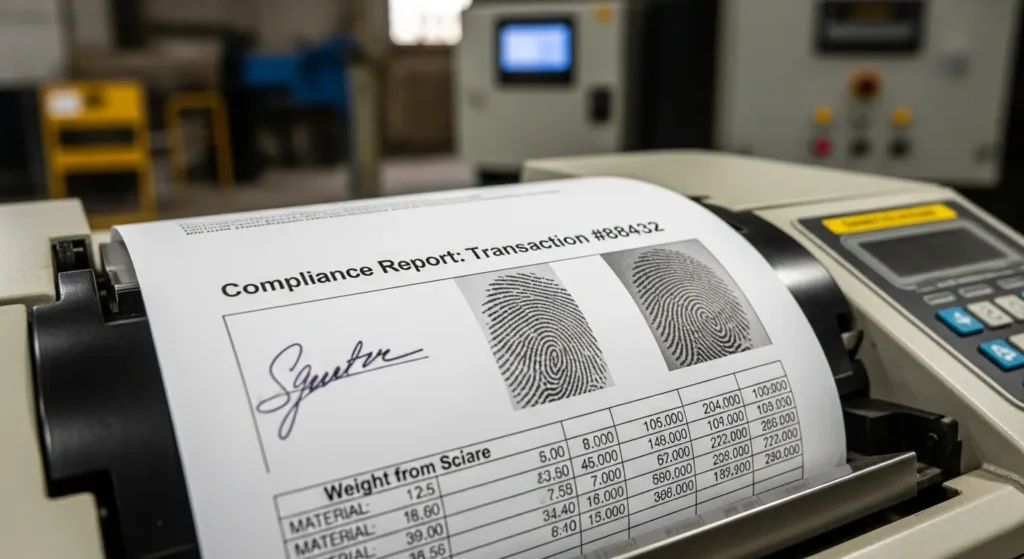
Paper signatures are easily forged, damaged, and frequently lost in filing cabinets. Digital compliance requires capturing electronic signatures and digital thumbprints directly on a biometric pad connected to your computer.
This creates an immutable digital record proving the seller actively agreed to the terms of the transaction and legally swore ownership of the material.
Linking Scale Weights to Supplier Profiles
Every single pound of metal purchased must connect to a verified profile. The software must automatically pull the exact weight reading from the scale indicator and lock it to the digital ticket.
This creates a concrete paper trail for every transaction. It prevents operators from manually altering weights or attributing stolen metal to a fake supplier profile.
Surviving a Scrap Metal Theft Investigation
No matter how secure your physical facility is, police officers will eventually arrive looking for stolen material traced to your area. Surviving a scrap metal theft investigation depends entirely on the speed and accuracy of your record-keeping.
- Providing Immediate Answers: When detectives are investigating stolen scrap metal cases, they demand immediate access to your transaction logs. Handing an investigator a cardboard box full of handwritten tickets immediately looks suspicious and invites a deeper audit of your entire business.
- Searching Digital Records: A proper enterprise software system allows you to search your entire database by name, vehicle make, license plate, or commodity type in seconds.
- Delivering Complete Dossiers: You can easily provide law enforcement with a clean, digital dossier containing high-resolution photos, exact weights, ID scans, and biometric signatures.
- Protecting the Entire Network: Organized thieves often hit multiple yards in the same region on the same day. If you operate multiple locations, managing multi-location scrap enterprises through a unified cloud database allows you to flag a suspicious seller at your first yard and instantly ban them across your entire network. This stops the thief from simply driving ten miles down the road to target your next facility.
Protecting Your Yard and Scaling with Confidence
A secure yard is a profitable yard. Building strong operational boundaries stops criminals from viewing your facility as an easy target.
Relying on outdated methods puts your entire business at risk. Implementing enterprise software protects your cash flow, keeps you compliant with local laws, and gives you total control over your inventory.
When your scale house operates with strict digital accountability, your team can process material faster. This allows you to focus on growing your commercial accounts without the constant threat of liability.
Frequently Asked Questions
Do scrap yards report to the police?
Yes. Regulated commercial recycling facilities are strictly required to report their daily transactions to local law enforcement or state compliance databases. This daily reporting includes seller identification details, vehicle license plates, and exact descriptions of the commodities purchased.
Why would someone steal copper wire?
Copper maintains a consistently high global market value and is utilized heavily in telecommunications, construction, and electrical infrastructure. It is relatively easy for criminals to strip from abandoned buildings or active commercial construction sites and convert into quick cash at unregulated facilities.
What evidence is needed to prove theft?
Proving theft requires establishing a clear, undeniable chain of custody. Law enforcement relies heavily on high resolution security camera footage, digital ID scans, license plate captures, and digital transaction tickets to legally link a specific individual to the stolen material.