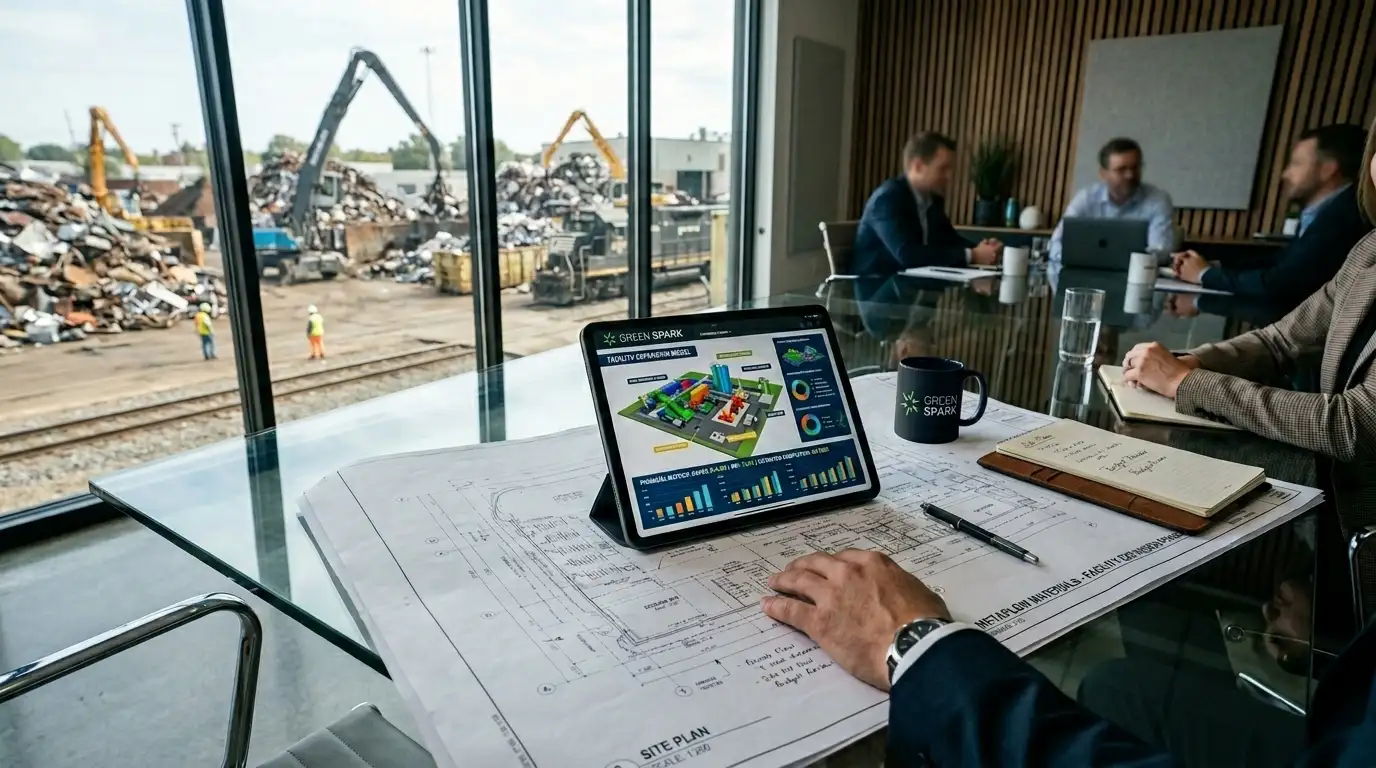


Moving material efficiently dictates profitability. When trucks sit idle, margins shrink. When drivers wait for instructions, fuel costs rise. Scrap metal transportation is the physical heartbeat of your business. Managing that movement requires absolute precision.
Many yards still treat transportation as an afterthought. They focus entirely on the scale house or the processing equipment. This creates a massive operational bottleneck. Freight spend eats directly into your bottom line. Securing commercial accounts requires flawless execution. Relying on whiteboards and text messages to coordinate your trucks is no longer a viable strategy.
You must treat your fleet as a core driver of revenue. Building a highly efficient system requires the right structure and reliable data.
The Hidden Costs of Traditional Scrap Metal Trucking
The traditional approach to dispatching relies entirely on human memory and constant communication. A customer calls the yard for a bin swap. The dispatcher writes it on the whiteboard. They call a driver to reroute them. The driver writes the address on a piece of paper.
This manual process creates severe friction points across the entire day.
- Drivers waste hours waiting for route updates, increasing idle time.
- Paper tickets get lost in the cab of the truck.
- Scale house operators cannot anticipate inbound tonnage.
- Customers experience delayed pickups and overflowing bins.
Every single delay costs money. When the dispatcher spends their entire shift answering phone calls from lost drivers, they cannot plan ahead. Overseeing daily yard activity becomes reactive. The hidden cost of manual scrap metal trucking is a hard cap on your total volume.
Upgrading Your Scrap Yard Fleet Management
Scaling your commercial volume requires a fundamental shift in how you manage assets. Upgrading your scrap yard fleet management means digitizing the entire workflow. You must connect the driver, the dispatcher, and the scale operator into one single system.
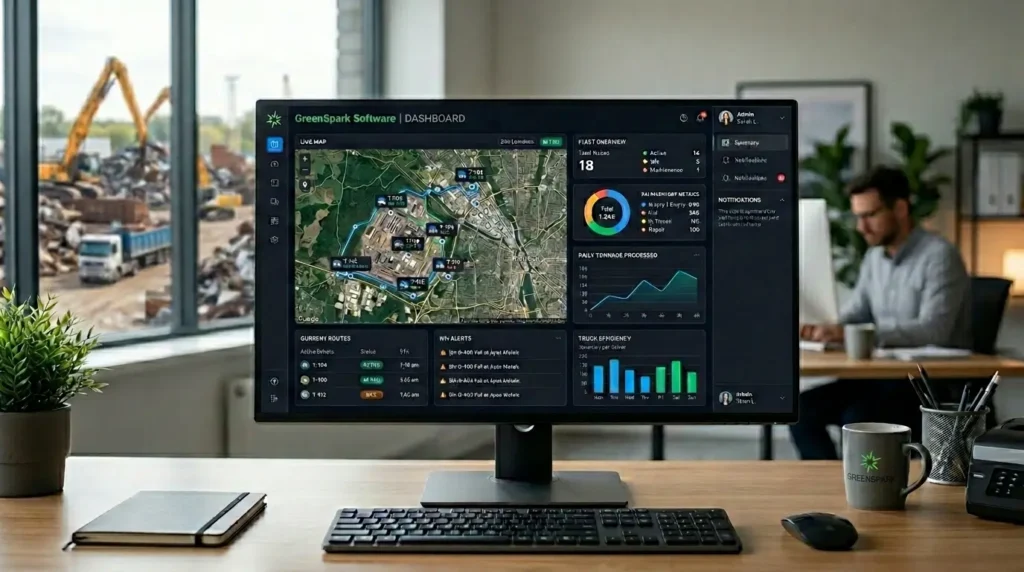
Moving away from physical whiteboards gives you total visibility. You know exactly where every truck is located. You know which bins sit at which commercial site. You can group pickups geographically to reduce fuel consumption and eliminate empty miles. This level of control is mandatory for companies operating across several regions.
The Operational Impact of Roll Off Dispatch Software
Deploying modern technology fundamentally changes the daily routine. Roll off dispatch software removes the guesswork from scrap metal logistics completely.
Eliminating Paper Tickets in Scrap Haulage
Paper tickets create massive administrative debt. Drivers lose them. Accounting teams spend days chasing them down at month end to verify tare weights. Modern systems replace physical paper with mobile applications for drivers. The driver receives the route directly on their device. They capture signatures digitally. They upload photos of the bin directly to the core system. The paperwork is finalized before the truck ever leaves the customer site.
Connecting the Fleet Directly to the Scale
The disconnect between the fleet and the yard creates bottlenecks. When roll off dispatch software connects directly to the scale, efficiency skyrockets. The scale operator knows exactly what material is arriving before the truck pulls in. This speeds up the process of processing inbound loads and prevents long lines at the gate.
| Feature | Manual Dispatching | Roll Off Dispatch Software |
| Routing | Whiteboards and phone calls | Automated digital route optimization |
| Proof of Service | Physical paper tickets | Digital signatures and timestamped photos |
| Asset Tracking | Memory and spreadsheets | Live GPS and bin location monitoring |
| Scale Integration | Blind arrivals | Pre-populated tickets before arrival |
Improving Supplier Service With Better Scrap Logistics
Commercial clients demand reliability. A manufacturing plant cannot halt production because their scrap bin is overflowing. Your ability to service these accounts dictates your commercial growth.
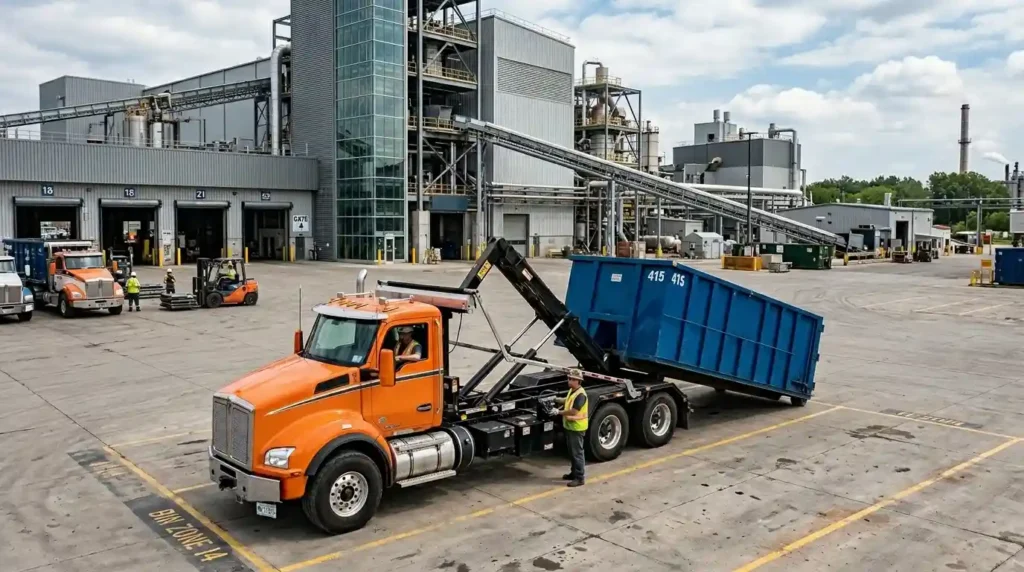
Better scrap logistics guarantee on time bin swaps. The system prevents missed pickups automatically. It sends automated notifications to the customer when the truck is en route. Managing your fleet professionally builds immense trust with large industrial suppliers. Securing those relationships requires managing complex freight schedules without a single failure.
In-House Fleets vs. Outsourcing to a Scrap Metal Shipping Company
Every yard owner faces a critical decision regarding asset ownership. Do you buy your own trucks or do you hire external scrap metal trucking companies? Both models require managing freight spend effectively.
| Operational Factor | In-House Fleet | Outsourced Trucking Company |
| Capital Expenditure | High upfront cost for purchasing trucks. | Zero upfront cost for vehicles. |
| Operational Control | Complete control over driver schedules and customer service. | Dependent on the carrier’s availability and routing. |
| Maintenance Risk | Yard absorbs all repair costs and downtime. | The carrier absorbs all mechanical risks and delays. |
| Scalability | Scaling up requires buying new assets and hiring drivers. | Immediate scalability during seasonal volume surges. |
Regardless of which model you choose, you must manage the data yourself. Even if you outsource the driving to dedicated carriers, utilizing intelligent routing tools ensures you assign the right load to the right carrier efficiently and avoid unnecessary demurrage charges.
Tracking Profit Margins in Scrap Metal Shipping
Scrap haulage is expensive. Fuel, insurance, and maintenance costs compound daily. If you do not track your operating expenses accurately, your freight costs will destroy your material margins. You must measure the profitability of every single route to prevent margin erosion.
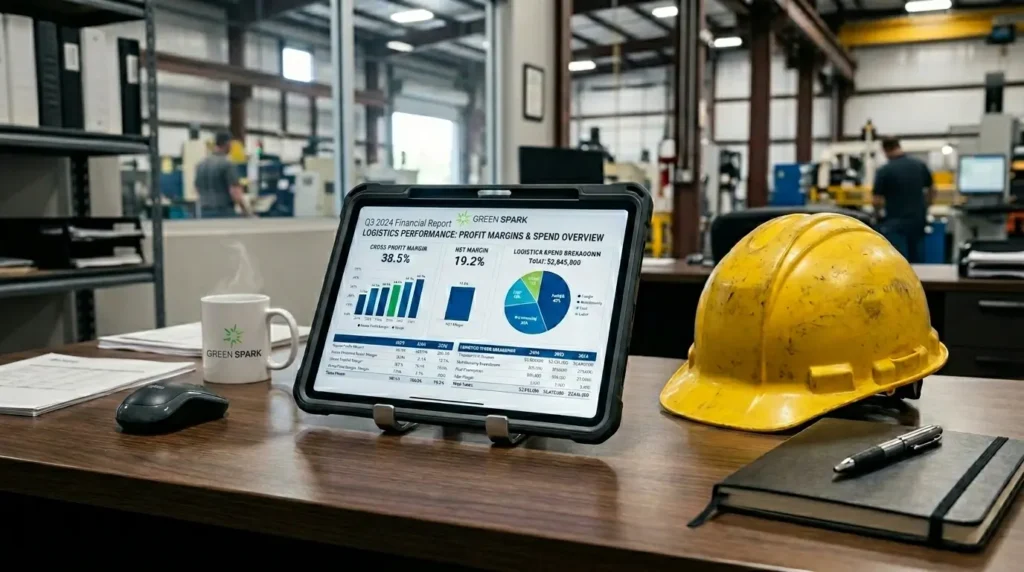
- Cost per ton-mile: Calculate the exact expense of moving material from the supplier to the scale.
- Route density: Group pickups geographically to maximize asset utilization and reduce fuel burn.
- Turn times: Measure how long drivers spend waiting at the commercial site or at your own scale house.
- Preventative maintenance: Track truck health to avoid expensive roadside breakdowns and delayed swaps.
Executing this requires generating accurate performance data continuously. When you understand your exact hauling costs, you can adjust your buying prices accordingly. Tracking these metrics is the only way of accurately measuring your financial return on transportation assets.
Final Thoughts on Building a Resilient Scrap Metal Transportation Strategy
Relying on outdated manual processes to move material puts a hard ceiling on your commercial growth. True operational leverage requires treating your dispatching and routing as a strategic asset rather than a daily chore. By digitizing your scrap yard fleet management, you remove the heavy friction that causes empty miles and delayed pickups.
A connected fleet protects your profit margins and builds immense trust with high volume industrial suppliers. When the dispatcher, the driver, and the scale house operate on the exact same digital system, your freight spend transforms from a blind expense into a highly optimized profit center.
Optimizing your scrap metal transportation requires serious operational discipline. The right system gives you complete control over your fleet and protects your profit margins. To review how these tools operate in a live environment, see the software in action today.
Frequently Asked Questions About Scrap Logistics
How do I keep track of roll off containers?
You track containers by assigning a unique digital identifier to every bin. The dispatcher assigns the digital asset to a specific customer location within the software. When the driver drops or swaps the bin, the system updates the inventory location automatically in real time.
How can I optimize scrap metal trucking routes?
You optimize routes by clustering commercial pickups geographically. Software analyzes traffic patterns and distance to group jobs together. This prevents drivers from crisscrossing the city multiple times, reducing fuel consumption and increasing the total number of daily swaps.
What is the best way to manage commercial scrap bin swaps?
The most effective method is utilizing proactive scheduling based on historical data. Do not wait for the customer to call you with a full bin. Use software to predict when the bin will be full based on past volume and automatically dispatch the truck before the customer asks.
How does dispatch software help with DOT compliance?
Digital dispatch tools allow drivers to complete their daily vehicle inspection reports electronically. This ensures all safety checks are logged and stored securely, protecting your yard from fines during roadside inspections.
What is the biggest hidden cost in scrap yard fleet management?
Empty miles are the largest hidden cost. Sending a truck out to drop a bin and returning to the yard with an empty bed burns fuel and driver hours without generating any inbound revenue.
Can roll off dispatch software improve driver retention?
Yes. Drivers get frustrated by confusing text messages, lost paper tickets, and constant phone calls. Providing them with a clear, digital route on a mobile app removes the friction from their day and reduces driver burnout.