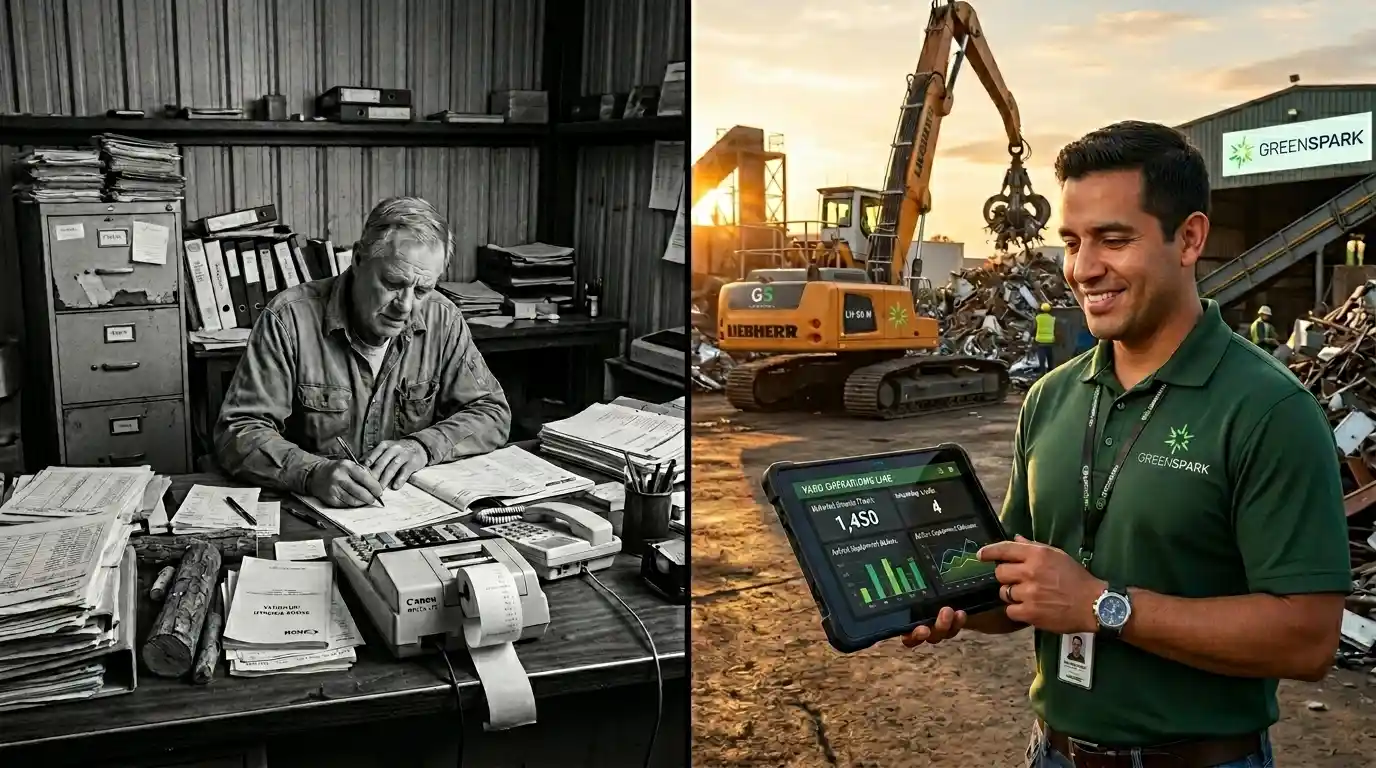


In part one of this series, we detailed how the scrap operating model shifted. Complexity increased across the board. Data multiplied rapidly. Speed became a massive advantage. When that foundational model shifts, the actual physical work inside the yard shifts right alongside it.
This is where the conversation turns practical. Modern scrap yard management software changes how work gets done on the ground. We are moving past basic digital tickets and entering an era of active intelligence.
The Old Pattern of Manual Oversight
Historically, strong performance depended heavily on human vigilance. Managers reviewed reports long after the fact, while owners spot checked tickets whenever they had a free hour. Buyers relied completely on memory to quote prices. The software simply recorded data. People had to interpret it.
That traditional model demands constant oversight. It relies on individuals carrying operational intelligence entirely in their heads. As a yard processes hundreds of daily transactions, human vigilance simply cannot scale alongside it. No manager can watch every single ticket.
This lack of leverage creates intense operational strain. Stress peaks at month end, during massive price swings, or when expanding to new locations. Relying on legacy software forces your team to work harder instead of smarter. The core issue is never capability. It is always a lack of leverage.
The Shift to Automated Scrap Yard Operations
In an AI-enabled environment, the nature of daily work changes completely. Instead of building reports manually, managers simply interpret them. Instead of hunting for inconsistencies in a spreadsheet, they are alerted to them instantly. Instead of identifying margin loss weeks later, they see it at the exact point of the transaction.
Good software for scrap metal business workflows is no longer a passive recorder. It becomes an active participant in operational oversight. That specific shift moves work from detection to decision-making. When your system flags the error for you, your team can focus on fixing it rather than spending hours trying to locate it.
Workflow Changes Inside the Yard
This is not an abstract concept. It shows up in daily workflow across every single role in the yard.
Total Confidence at the Scale
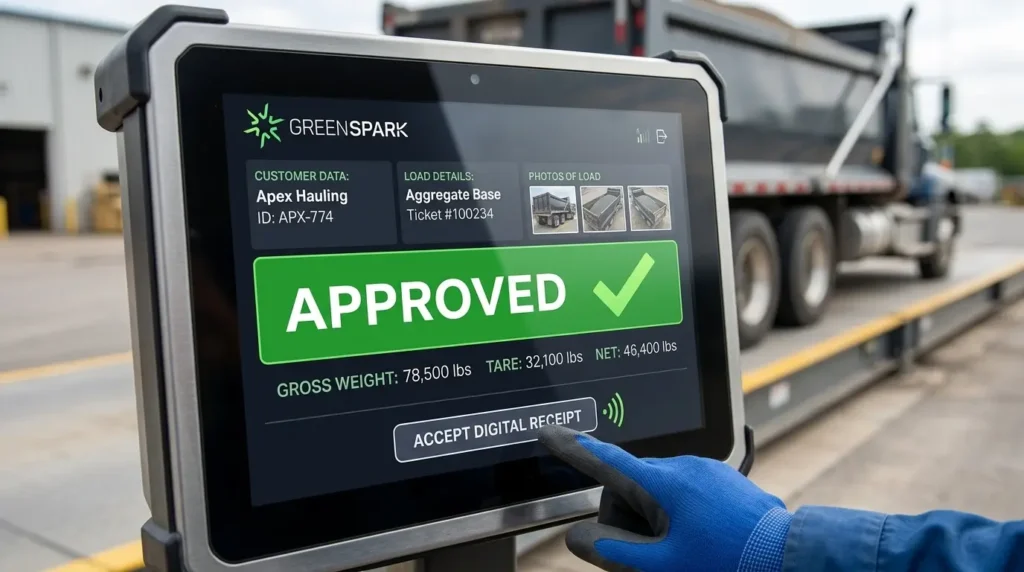
The scale house is high-pressure. Trucks are lined up. Phones are ringing. In this environment, pricing inconsistencies are now flagged before a ticket even closes. Customer history surfaces automatically for the operator. Margin exposure is visible at the moment.
The operator does not second-guess their inputs. They execute with total confidence. By utilizing connected scale ticketing tools, the line moves faster, and errors drop to zero.
Automated Alerts for Yard Managers
Instead of manually cross-checking shifts, materials, and locations at the end of a long day, anomalies surface automatically. Inventory discrepancies do not sit unnoticed in the yard. Unusual buying patterns are highlighted immediately.
Performance summaries generated without any manual assembly. Operations managers start their day reviewing exceptions rather than compiling raw data.
Faster Cycles for Accounting
Reconciliation becomes significantly lighter. Data flows cleanly and directly between operations and financials. The month-end closes are tightening up. There is far less time spent chasing numbers and calling the yard for clarification.
Accounting teams spend more time validating performance using dedicated finance modules rather than fixing basic data entry mistakes.
Live Visibility for Executives
Operational visibility becomes continuous. Exposure is monitored in real time across the entire enterprise. Performance across different yard locations is comparable instantly.
Business decisions rely on live insight instead of delayed summaries generated by static reporting features. Oversight completely shifts from periodic review to ongoing clarity for owners and executives.
Continuous Oversight With AI Scrap Metal Software
The next layer of this evolution moves well beyond basic dashboards and alerts. Dedicated AI Agents operate directly inside the system with clearly defined responsibilities.
They monitor margin thresholds. They audit transaction patterns. They track contract enforcement. They generate operational summaries automatically. They surface abnormal activity without ever being prompted by a human. For example, a dedicated finance agent can audit tickets for accounting automatically.
They do not replace management. They act as a continuous second set of eyes. Oversight becomes totally embedded in the platform. It is not something you remember to do. It is something that is always happening in the background. This changes the entire rhythm of the business.
Manual vs. Automated Operations
| Process | Manual Approach | Automated Approach |
| Scale Tickets | Spot checked at the end of the week | Flagged instantly before the ticket closes |
| Margin Tracking | Calculated periodically on spreadsheets | Monitored live per transaction |
| Month End Close | Days spent chasing missing data | Clean data flows directly to accounting |
| Inventory | Reconciled periodically with physical counts | Continuous tracking and automated alerts |
| Compliance | Checked manually by the administrative staff | Audited silently by active AI agents |
How Artificial Intelligence in Recycling Makes Work Strategic
There is a common misconception that AI reduces the human element in the workplace. In the scrap industry, that fear misses the point entirely. This industry runs on relationships, intense negotiation, deep trust, and years of experience. Scrap yard efficiency software does not replace those core human strengths. It removes the operational friction surrounding them.
- Fewer avoidable data entry mistakes.
- Fewer manual workarounds and spreadsheets.
- Fewer operational blind spots.
- Less overall stress at the end of the month.

When daily friction drops, leaders gain immense capacity. They gain the capacity to think strategically. They gain the capacity to pursue aggressive growth. They gain the capacity to strengthen supplier relationships using robust commercial tools. They gain the capacity to evaluate expansion opportunities with total confidence.
The exact same team, supported by intelligent systems, can manage significantly more complexity without adding equal headcount. That is true leverage. This is exactly how AI for scrap metal business growth operates.
The Competitive Divide in the Scrap Business
Two yards can look identical on the surface. They have the exact same equipment. They process the same materials. They face the exact same market conditions.
But underneath the surface, one may be operating with embedded intelligence supporting every single transaction. The other may still depend entirely on manual oversight. Over time, that difference compounds massively. One yard reacts faster to intense margin pressure. One yard scales its operations with far less chaos. One yard operates with absolute clarity. The other operates with constant strain.
The difference between the two is not effort. It is the structure. You can clearly see the financial impact of this structure by evaluating your own ROI potential.
The Future of Scrap Recycling Remains Human
The future of scrap recycling is not fully automated yards with zero people. It consists of operations where intelligence is firmly built into the core system, so your people focus exclusively on higher-value decisions.
The operator still builds critical relationships at the scale. The buyer still negotiates the best deals. The manager still leads the yard team. The owner still steers the entire company. But they do so with better visibility, stronger controls, and significantly less friction. That is what redefining work actually means.
In the final article of this AI series, we will step away from theory and focus on something highly practical. If this is the direction the industry is moving, what is the right path forward? Adoption is a progression. Clarity around that progression separates intense pressure from confident growth. Ready to see this leverage in action?
Frequently Asked Questions (FAQs)
How does AI scrap metal software change daily yard operations?
It shifts the workload from manually hunting for errors to acting on automated alerts. The system monitors transactions continuously and flags inconsistencies before they impact your margins.
What is the main benefit of automated scrap yard operations for managers?
Managers no longer need to spend hours compiling data or cross-referencing tickets. The software surfaces unusual buying patterns and inventory discrepancies instantly.
Will artificial intelligence in recycling replace human workers?
No. The industry relies heavily on relationships and negotiation. AI removes friction and manual data entry so your team can focus on high-value decisions and customer service.
How does AI for scrap metal business processes improve scale ticketing?
Operators receive instant alerts regarding pricing errors, customer history, and margin exposure right at the scale. This allows them to execute tickets accurately without second-guessing.
What does the future of scrap recycling look like with AI agents?
The future involves operations where intelligence is built directly into the system. AI acts as a continuous second set of eyes, providing better visibility and stronger controls for leadership.
Why is software for scrap metal business growth so important right now?
As data multiplies and market complexity increases, manual tracking fails to keep up. Modern software provides the necessary leverage to manage that complexity without adding constant strain on your staff.