

When we documented the fundamental shifts in the scrap operating model, we mapped how complexity and data multiplied across the industry. Following that, we broke down exactly how those changes redefine daily yard workflows and human oversight. Now we face the operational reality. How do you actually execute this transition?
Answering that requires a modern scrap metal business plan. Understanding the AI in the scrap metal industry is useless without a clear roadmap for execution. Without structure, deploying new technology creates more bottlenecks than it solves.
The most successful operators view technology as a structural advantage. Building that advantage means aligning your software strategy directly with your financial goals and operational capacity before you ever write a check.
Scrap Yard Software Adoption Is a Progression
Overhauling an entire operation overnight is completely unrealistic. The best operators know that scrap yard software adoption happens in stages. You do not flip a switch. You build momentum.
Successfully implementing scrap metal software requires a phased approach that aligns exactly with your available capital and your team capacity. Rushing a scrap software implementation creates chaos at scale. We recommend a structured path that secures your accounting processes while laying a stable foundation for scale.
The Five Stages of Scrap Yard Digital Transformation
Every operation sits somewhere on a specific maturity curve. Identifying your current position dictates your immediate next steps.
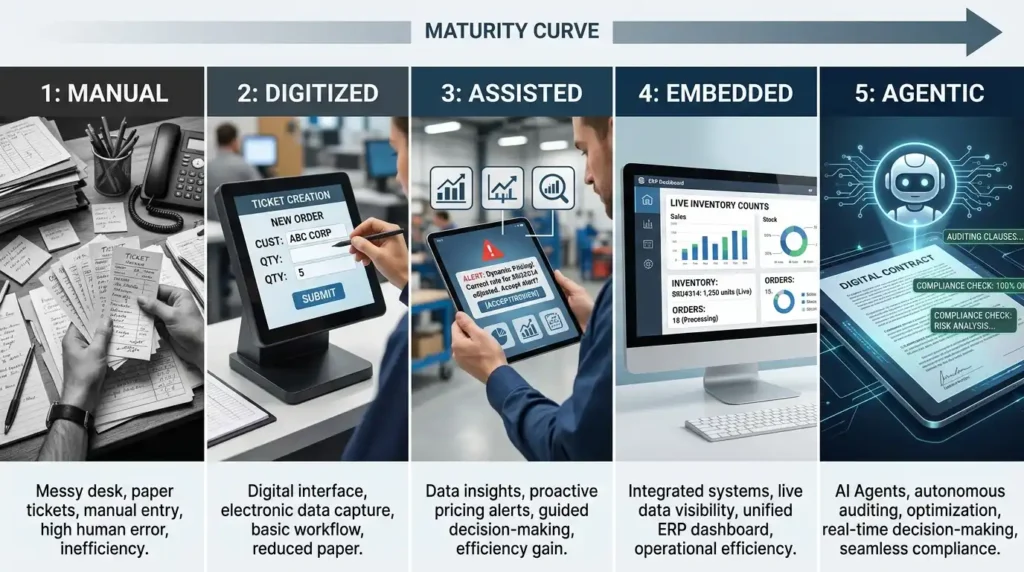
| Stage | Description | Operational Impact |
| Level 1: Manual | Spreadsheets and paper tickets. | High error rate, delayed margin visibility. |
| Level 2: Digitized | Basic software records transactions. | Better tracking, but requires heavy manual review. |
| Level 3: Assisted | System flags pricing errors. | Faster ticketing, reduced friction at the scale. |
| Level 4: Embedded | Real-time margins and live inventory. | True visibility for leadership teams. |
| Level 5: AI Agents | Continuous automated auditing. | Maximum leverage for scrap metal business growth. |
Level 1: Manual Scrap Yard Operations
Disconnected systems dominate this stage. Managers assemble reports long after the physical material moves. Decisions happen reactively. Many yards start here, but staying here severely limits your ability to compete.
Level 2: Digitized Software for Scrap Yards
Basic workflows move into a centralized digital environment. The system captures transactions digitally. Reporting exists, but it demands manual assembly. Insight is available, but it is not embedded directly into the daily workflow.
Level 3: Assisted Intelligence and Margin Visibility
The system begins actively supporting your team. Pricing inconsistencies are flagged immediately. Unusual buying patterns surface before the ticket closes. This is the first major milestone in any scrap yard digital transformation because it drastically speeds up your scale operations.
Level 4: Embedded Recycling Center Management Software
Intelligence becomes native to the operation. Margin visibility exists at the exact moment of the transaction. Operational bottlenecks surface automatically. Managing a scrap yard becomes proactive rather than reactive for your yard supervisors.
Level 5: AI Agent Supported Operations
Dedicated intelligent assistants assume specific responsibilities. They audit transaction patterns and generate compliance summaries automatically. Intelligence operates silently alongside your human workforce.
Updating Your Scrap Metal Recycling Business Plan
A static strategy will fail. A modern business plan for scrap metal company growth must account for shifting market dynamics. You must start with one focused initiative. Choose margin visibility, reporting automation, or multi-yard oversight.
When updating your strategy, your roadmap must include:
- Clear timelines for data migration.
- Specific operational bottlenecks to solve first.
- Defined metrics for adoption success.
Once you improve one core area, trust builds across the entire team. When trust builds, expansion accelerates. If you want to grow your scrap metal business operations efficiently, your roadmap must prioritize continuous upgrades to your data visibility.
The Human Side of Implementing Scrap Metal Software
Technology is never the hardest part of an upgrade. People are. AI maturity is heavily cultural. Operators must see immediate value in their daily tasks. If the new recycling facility software makes their job harder, they will reject it entirely.

Managers need clearer visibility. Ownership needs a measurable return. This is exactly why assessing new technology systematically matters deeply. You must align your scrap yard technology with the people operating it. When those specific conditions are met, adoption sticks.
Scaling a Scrap Yard With Total Confidence
The ultimate goal of adding AI to your operation is not to replace people. The absolute goal is confidence. You need complete confidence in your margins. You need confidence in your physical inventory numbers. You need confidence when reconciling accounts at the end of the month.
For companies managing multiple yards, that confidence dictates how fast you can acquire new facilities. When intelligence aligns with daily workflow, leaders make aggressive decisions without hesitation. That confidence is the true engine of scaling a scrap yard.
Next Steps for Scrap Metal Business Growth
The industry does not need more hype. It needs structure. We designed these industry insights to provide exact clarity on what has changed and how your yard must adapt. Reviewing current recycling industry trends shows that yards prioritizing intelligent systems capture market share significantly faster.
The strongest yards will rely on human relationships supported by embedded intelligence. That support is available right now. If you are ready to execute your updated scrap yard business plan, request a demo now.
Frequently Asked Questions (FAQs)
How does AI specifically impact scrap metal business growth and margin control?
It shifts oversight from periodic review to continuous monitoring. AI flags margin leakage at the scale before the transaction finishes. This stops profit loss instantly and protects your bottom line.
What is the most critical phase of scrap software implementation for a high-volume yard?
The initial data migration and scale house training are the most critical. If your inbound ticketing stops, your business stops. You must integrate your physical hardware seamlessly first.
How do I phase AI into my existing scrap metal recycling business plan without disrupting cash flow?
Target high-friction areas first. Automate your compliance tracking or your daily reporting. This frees up administrative hours and provides an immediate return to fund the next phase of deployment.
How should a multi-location operator approach scrap yard digital transformation?
Centralize your pricing and reporting data first. Establish a single source of truth across all facilities before deploying advanced automation at individual yards.
What are the hidden operational costs of delaying scrap yard software adoption?
Uncaught grading errors, unmanaged price volatility, and excessive overtime for administrative staff. Delaying adoption directly funds your competitors who are already operating efficiently.
Which specific operational metrics indicate a successful software integration?
Look directly at your month-end close time. If it drops from a week to a single day, the integration worked. You should also monitor scale transaction times and the volume of manual ticket overrides.