

The industrial recycling sector is unforgiving to those who operate blindly. Building a profitable facility requires massive capital investment, strict grading discipline, and total control over your inventory from the moment it hits the scale.
This guide details how to start a scrap metal business that is built to scale efficiently, heavily focusing on the technology and operational infrastructure required to survive in a modern, highly regulated market.
Facilities relying on manual ticketing, whiteboards for dispatch, and disconnected accounting systems suffer from high overhead and constant margin shrinkage. To capture reliable profit, new operators must implement modern technology and strict operational controls from day one.
Creating Your Scrap Yard Business Plan
Transitioning from a solo collector to a commercial operator requires a rigorous financial model. A scrap yard business plan must outline your capital requirements, your targeted commodities, and your technology stack. In this industry, a business plan that ignores software is incomplete.
You cannot manage a high-volume commercial facility on spreadsheets. You need to know your true average cost on non-ferrous materials at any given hour. You need to know exactly how much capital is tied up in work-in-progress inventory.
Establishing a technology foundation early gives you the strategic reporting for yard owners necessary to track every dollar moving across the yard. This visibility allows you to monitor real-time commodity exposure and protect your margins during volatile market shifts.
If you cannot see your data, you cannot adjust your buying prices fast enough to stay profitable.
Essential Steps for Starting a Scrap Yard
Setting up a scrap metal business involves navigating heavy industrial zoning laws, securing the right environmental permits, and optimizing your physical traffic flow.
Zoning and Environmental Compliance
Industrial recycling centers require specific zoning approvals. You will need permits to manage stormwater runoff, handle hazardous materials, and operate heavy machinery. Working closely with local environmental agencies prevents costly operational shutdowns.
Furthermore, state laws require strict compliance reporting for every transaction. Your facility must be equipped to capture ID scans, vehicle information, and signatures automatically to satisfy local law enforcement and state databases.
Traffic Flow and Yard Layout
When designing your facility layout, you must separate your inbound public traffic from your outbound commercial freight. A single entry and exit point causes massive bottlenecks at the scale house. You need clear, designated zones for ferrous processing, non-ferrous purchasing, and finished goods staging.
Equipping your team with the correct tools for operations managers provides the visibility needed to monitor this yard flow, track where material is being staged, and eliminate traffic jams before they cause your best suppliers to leave and go to a competitor.
Must-Have Scrap Metal Business Equipment
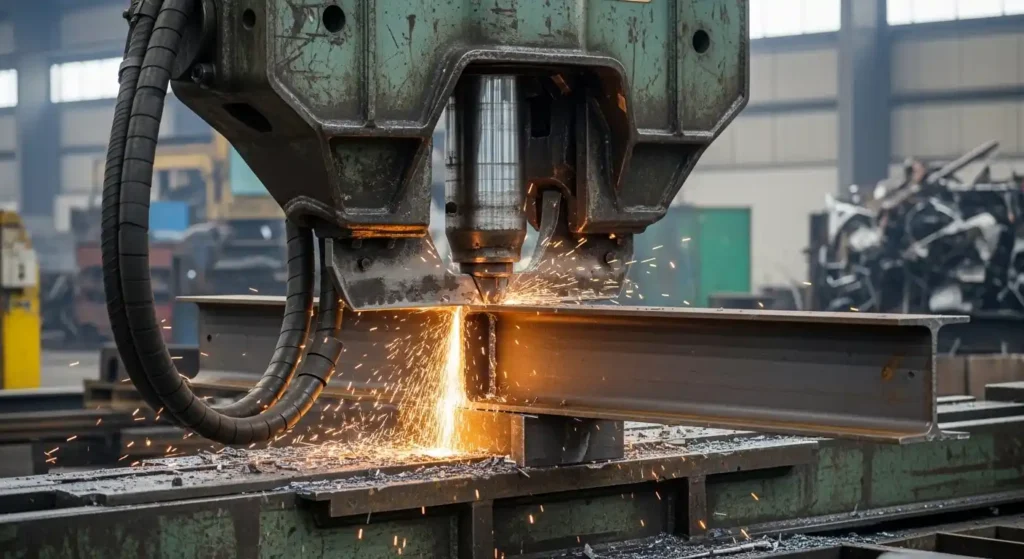
Processing heavy volume requires serious industrial hardware. Your team cannot function safely or efficiently without the correct machinery.
Your initial capital expenditure should prioritize the following core assets:
- Commercial Truck Scales: High-capacity weighbridges are mandatory for processing inbound freight and outbound shipping containers accurately.
- Platform Scales: Smaller, highly calibrated scales are necessary for accurately weighing high-value non-ferrous metals like copper and brass.
- Material Handlers: Heavy-duty excavators equipped with grapples or magnets are required to move ferrous piles and load outbound trucks efficiently.
- Wire Strippers and Balers: Processing equipment that adds immediate value to raw material by preparing it for mill readiness.
- Connected Hardware: ID scanners, signature pads, and automated cameras at the scale house.
The speed of your scale directly impacts your daily capacity. By integrating scrap yard scale hardware directly into your central software system, you completely eliminate manual data entry. The weight registers in the system automatically, keeping the line moving fast and preventing costly human errors at the ticket window.
Modernizing Daily Scrap Metal Business Operations
The biggest threat to a new recycling facility is manual data entry. Relying on paper tickets and handwritten receipts leads to lost inventory, compliance failures, and frustrated customers. To survive and scale, you must digitize the entire workflow from the moment a truck hits the property.
Automating the Scale House
When a supplier pulls up to the scale, your operator should be able to generate a clean, legally compliant ticket in under a minute. Utilizing an automated scrap yard ticketing system allows you to capture compliance data, process quick payouts, and automatically match the weight directly from the scale hardware. This prevents the operator from typing the data twice, significantly speeding up the line and removing human error.
Eliminating Grading Errors at the Door
Grading errors completely destroy profit margins. If an operator accidentally buys a load of low-grade material at high-grade prices, the yard absorbs that financial loss immediately. Implementing AI material recognition drastically reduces these mistakes.
Camera systems linked to artificial intelligence monitor incoming loads, flag anomalies to the operator in real time, and protect your margins on every single inbound transaction.
Maintaining Real-Time Inventory Control
You cannot sell what you cannot locate. Every pound of metal purchased must be immediately tracked, categorized, and priced. Implementing scrap metal inventory tracking gives your operations team total visibility over raw materials, regrades, and finished goods.
This ensures you know your exact cost basis and volume before committing to a mill sale.
Developing Your Scrap Metal Business Marketing
Relying solely on public foot traffic will not sustain a commercial yard. Your marketing strategy must aggressively target high-volume B2B accounts like demolition contractors, manufacturing plants, and large-scale electricians. Securing these relationships requires a highly professional operational infrastructure.

To attract and retain these top-tier suppliers, your facility must offer the following capabilities:
- Customized Tiered Pricing: Commercial clients demand specific pricing structures based on their monthly volume. You must be capable of managing commercial scrap contracts flawlessly, ensuring your best suppliers automatically receive their agreed-upon rates the second they hit the scale.
- Reliable Bin Tracking: If your dispatch team loses track of a 40-yard roll-off bin because they are managing logistics on a whiteboard, that commercial client will simply find another yard. Utilizing scrap yard logistics and dispatch software connects your routing directly to your central ticketing system, ensuring every asset is tracked.
- Rapid Settlements: High-volume accounts expect fast, perfectly accurate payments. Connecting your scale activity directly to finance and accounting integrations guarantees that invoices and settlements are generated without delay, double-entry, or manual recalculation.
An Alternative Route: Buying a Scrap Metal Business for Sale
Building a brand new facility from the ground up is not the only path to ownership. Purchasing an existing scrap metal business for sale offers distinct advantages for entrepreneurs looking to bypass the difficult startup and zoning phases.
Acquiring an active yard gives you immediate cash flow, an established local customer base, and active operating permits. You inherit the existing supplier relationships and the physical infrastructure. However, legacy yards almost always run on outdated, legacy server-based systems and require immediate modernization.
If you take the acquisition route and plan to purchase multiple yards over time, managing multi-location scrap enterprises demands a unified, cloud-based technology platform. You cannot run three different yards on three different legacy software systems. You must standardize pricing, centralize your inventory tracking, and consolidate your compliance reporting across all your newly acquired facilities to maintain total control of the growing organization.
Frequently Asked Questions
How much does a scrap metal business make?
Revenue varies wildly based on regional competition, facility size, and current global commodity markets. High-volume commercial yards focus on tight operational efficiency and volume rather than massive margins on individual transactions.
Is scrap metal a good business?
Yes, it is a highly resilient industry. It serves an essential role in the global supply chain by feeding raw materials back into manufacturing sectors, making it highly resistant to typical retail economic downturns.
Is the scrap metal business profitable?
Profitability in this industry depends entirely on inventory control and operational efficiency. Yards that accurately grade material, track their inventory costs, and process material quickly see the highest profit margins.
Do I need a license to sell scrap metal?
Most municipalities and states require specific business licenses, environmental permits, and police reporting credentials to operate a commercial scrap facility.